
trex MES. Every shop-floor event is tied to the work order in the ERP.
trex brings MES (manufacturing execution system) and MOM (manufacturing operations management) functions together on one platform. It collects machine and PLC data and takes work orders to the shop floor; it tracks downtime, scrap, quality and maintenance on the same record and writes the result back to the ERP.

A five-step flow: ERP (work order, stock card, SOP) → trex MOP (the work order is matched to the right station and operation) → shop-floor execution (operator panel and Andon) → shop-floor data (from PLCs and sensors through NightWatch) → ERP (production confirmation, scrap, consumption, downtime). The flow returns to the start through the work order, execution and confirmation cycle.
Fact sheet
- MES & IIoT · Manufacturing execution (MES) and manufacturing operations management (MOM)
- trex Digital Manufacturing · Türkiye
- trex Digital Manufacturing Operations Platform (MOP)
- NightWatch data-collection service · PLC, OPC UA, OPC DA, Modbus TCP, MQTT, AMQP
- Web-based reporting and monitoring · mobile app · operator panel · Andon boards
- Standard integration: the work order comes from the ERP, the production confirmation goes back to it
- Machine-based data-collection licence and tag-based process-data licence
02Who it is for
Manufacturers who want to close the gap between the shop floor and the ERP.
trex positions the platform so that it can be adapted to each plant’s own workflow. No employee or revenue threshold is published for the product; what decides is the need to execute and measure the work order on the shop floor in real time.
03Which business problems it solves
The plan is in the ERP, reality is on the shop floor; the two only meet at the end of the shift.
The areas trex targets: reliable data from the shop floor, comparing plan with actual, the causes of downtime and scrap, digitalising quality and maintenance, an uninterrupted data flow from the shop floor to the ERP. The common root is production tracked on paper and by manual entry.
04Core capabilities
From work order to confirmation, on one platform.
Definitions from plant to equipment
Plants, work centres, workstations and equipment (machines, moulds) are defined; operations, staff and teams are matched. Shift and working-time calendars are set per station, and permissions are granted per user.
Machine-based Gantt chart
Work orders are sequenced, split and distributed by drag and drop per machine, equipment or line. Planned maintenance and set-up stops are added to the plan; bulk plan entry is supported.
Planned and actual quantity
Actual output is confirmed at once; planned and actual quantities are compared for every work order. Several work orders can run together on the same machine.
Cause, duration and quantity recorded
The cause, duration and quantity of downtime and scrap are recorded; loss areas become ready for root-cause analysis.
OEE, TEEP, MTTR and MTBF
OEE and TEEP analyses separate availability, performance and quality losses. Cycle time, speed, set-up and breakdown response times are examined with histograms and Pareto charts per product, operation, equipment and mould.
QMM quality management
Inspection plans, numeric and OK / NOK checks, SPC, calibration tracking and quality KPIs are recorded on the shop floor; a non-conformity starts corrective and preventive action.
MM maintenance and repair management
A breakdown or service need becomes a maintenance work order; planned maintenance is compared with what was done. Labour, material and downtime are recorded; MTTR and MTBF are calculated automatically.
Monitoring console, reports, Andon
A plant monitoring console, a drag-and-drop report generator, customisable dashboards, a mobile app and Andon boards; notifications by e-mail, SMS or Telegram when a threshold is crossed, and scheduled automatic reports.
Images from the product
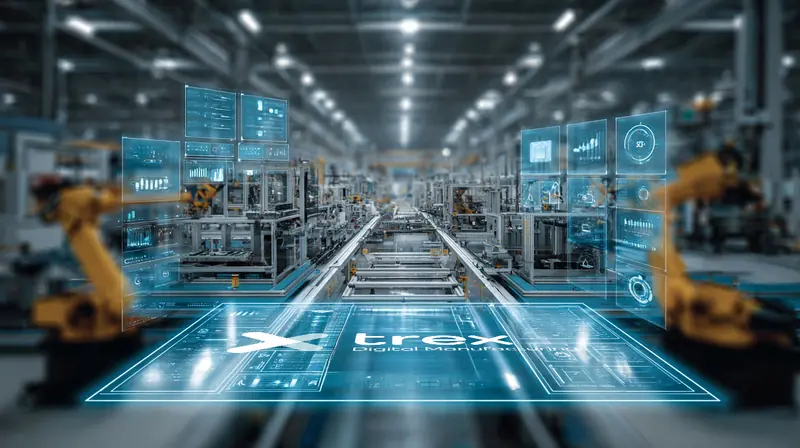
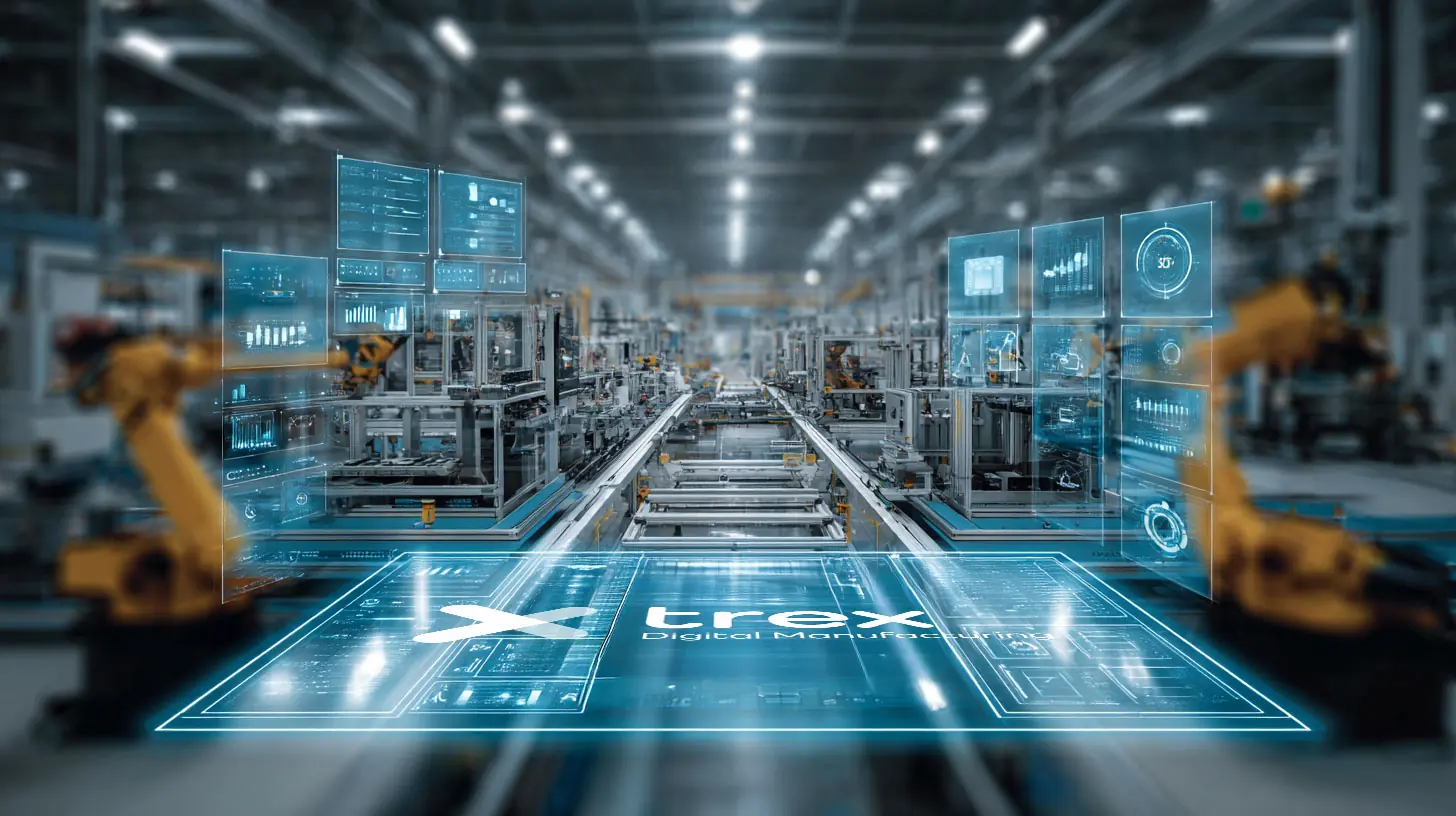
The manufacturing operations platform: the line’s data on one layer. 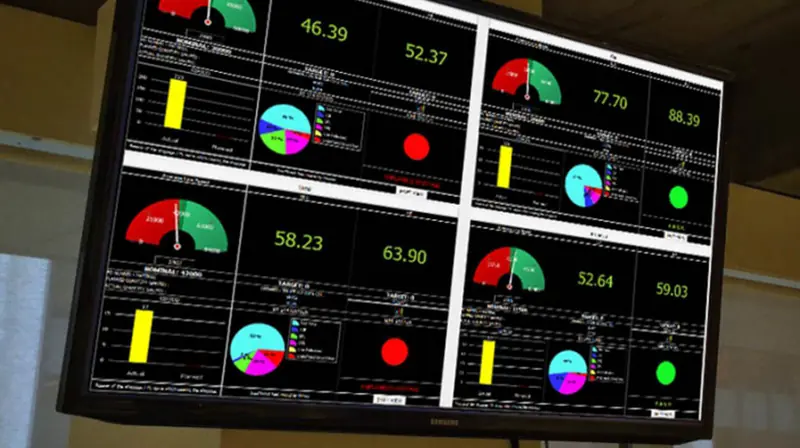
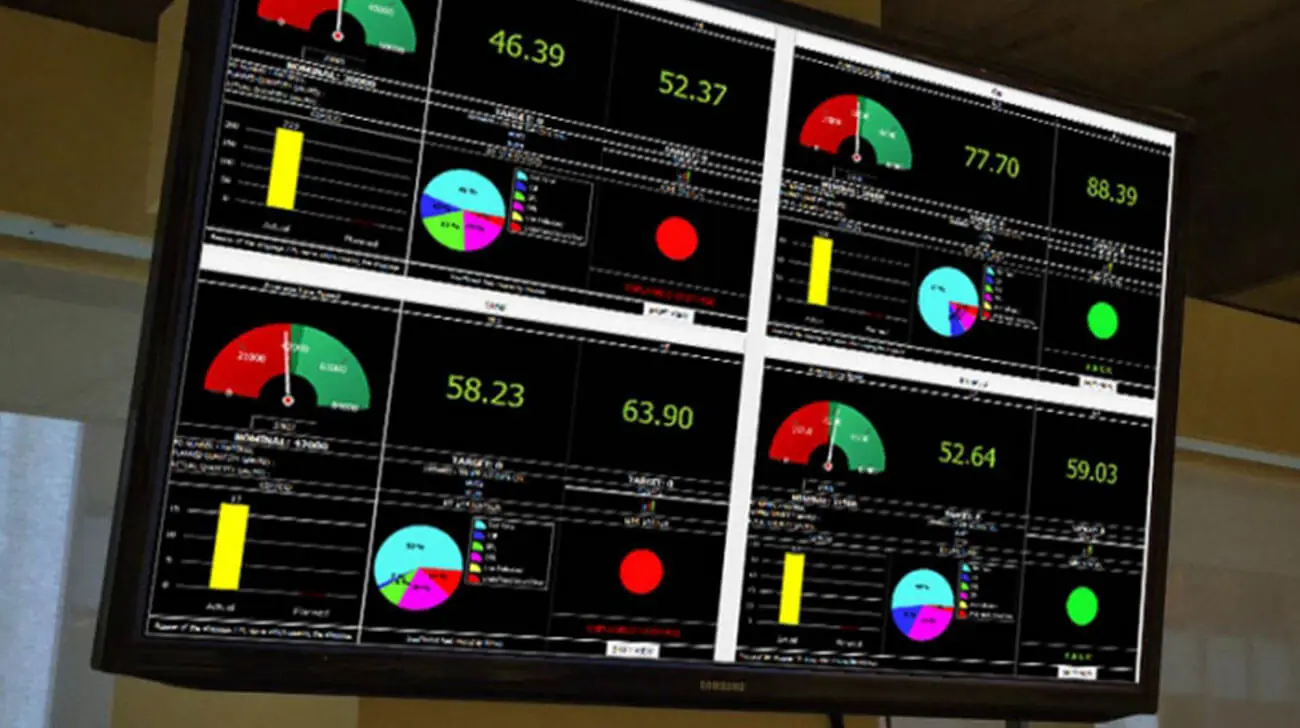
Andon board: machine speed and status on the shop floor, in plain sight.
05How it works
Data from the shop floor, work orders from the ERP, both on one record.
The operating model rests on a two-way flow: the work order comes from the ERP and reaches the shop floor with the right parameters; the data collected on the shop floor is matched to the work order, analysed, and the result is written back to the ERP.
1. The production structure is defined · 2. The shop floor is connected · 3. The work order comes from the ERP · 4. Production is executed and monitored · 5. The result goes back to the ERP
06Modules and functional areas
One platform, modules chosen to fit the need.
trex offers its platform as modules and builds the scope around each plant’s needs. Below are the core modules in the vendor’s own naming; which of them enter the scope is decided at proposal stage.
- MES / MOMCore MES functions: definitions, planning, downtime and scrap, OEE / TEEP analyses
- Industrial IoTMulti-source data collection from PLCs, sensors and devices through NightWatch
- Machine Data CollectionMachine-based process data; licensed by the number of machines
- Process Data CollectionTag-based collection of process parameters
- Integration ManagementWork orders from the ERP, production confirmations to the ERP; subsystem integration
- QMM Quality ManagementInspection plan, OK / NOK, SPC, calibration, quality KPIs
- MM Maintenance ManagementMaintenance work orders, planned maintenance, cost, MTTR / MTBF
- LOT / Traceability ManagementLot-based traceability of raw material and semi-finished goods
- Internal Logistics ManagementForklift calls from the line, tasks on tablets, transfer requests to the WMS
- Digital Manufacturing TwinA digital model of production from plant, line and machine definitions
- Lens AITurns a question asked in natural language into an SQL query and a chart
- AndonShows production speed, downtime reason and OEE on boards on the shop floor
07Industries
The industry solution pages cover five industries.
trex positions the platform independently of industry and publishes a separate solution page for five industries. The industry pages put needs such as paperless production, traceability and regulatory compliance first.
08Integration and API
Two-way with the ERP, at protocol level with the shop floor.
trex states that its standard integration architecture works regardless of the ERP product and version. Because the interface documentation is not public, the scope for your ERP version and data fields must be confirmed in writing.
Four sources from the shop floor — PLCs (Siemens, Mitsubishi, Omron, Rockwell / Allen-Bradley), industrial protocols (OPC UA, OPC DA, Modbus TCP, MQTT, AMQP), devices (IoT Box, scales, quality measuring devices) and operator input (downtime reason, scrap, confirmation) — come together in trex MOP (NightWatch, MES / MOM). The platform connects to the ERP in both directions (work order and production confirmation), and to maintenance, quality and warehouse management systems through subsystem integration.
Work order, stock card, staff, SOP
The work order opened in the ERP is matched to the right station, operation and parameters; stock codes, cycle times, capacity and operation parameters reach the shop floor up to date.
Production confirmation and labour data
Output quantity, scrap, consumed material (with lot tracking), downtime, shift and timekeeping data are transferred to the ERP; cost and efficiency analyses rest on this data.
Maintenance, quality, WMS, APS, energy
A breakdown on the shop floor becomes a maintenance work order; quality criteria come from the upper system and measurements are fed back; inter-warehouse transfer requests go to the WMS. APS and energy management connect to the same structure; integration with quality systems such as QDMS is stated.
NightWatch: PLCs and industrial protocols
Direct reading from Siemens, Mitsubishi, Omron and Rockwell / Allen-Bradley PLCs; support for OPC UA, OPC DA, Modbus TCP, MQTT and AMQP; data from IoT Boxes, COM-port scales and quality measuring devices.
A published integration example
The sample integration table trex publishes includes an exchange of planning, work orders and production confirmations with abas ERP. For your own abas version, the data fields and triggers should be set separately in the project.
Lens AI on the database side
Lens AI works on different databases, including PostgreSQL, SQL Server, Oracle and MySQL; query results can be sent to e-mail, Slack or Microsoft Teams.
09AI and automation
A question in plain language, an answer from the database; prediction is still on the roadmap.
trex’s AI component is Lens AI: it makes production data queryable without technical knowledge. Its first focus is MES, MOM and manufacturing data intelligence; the vendor describes the component as domain-agnostic, able to extend to other business applications as well.
Turns a question into a query
A question asked in everyday language, for example last month’s defect rate, is converted into an SQL query and run on the database.
Role and schema awareness
Users reach only the data they are authorised for; queries are built with the role and the database schema in mind.
The right chart, chosen automatically
The most suitable chart type is chosen automatically for the result; repeated queries compare periods and make trends visible.
Calendar-based runs and notifications
Queries run automatically on a set schedule; results reach the people concerned by e-mail, Slack or Microsoft Teams.
By the vendor’s own framing, industry-specific ready-made analysis templates and advanced prediction models are forward-looking goals; the function described today is querying and visualisation. Critical query scenarios should be tested in a pilot.
10Deployment · security · releases
The shop-floor component at the edge or in the cloud; the central platform needs written confirmation.
The NightWatch data-collection service can run on industrial PCs on the shop floor or as a container service in the cloud. Because the hosting model and security details of the central platform are not public, the points below should be confirmed in writing before purchase.
Four layers, top to bottom: business systems (ERP, APS, WMS: orders, plan, stock) → trex MOP (planning, execution, quality, maintenance, analysis) → NightWatch (the data-collection service; on a shop-floor PC or as a container in the cloud) → shop floor (PLC, sensor, energy analyser, scale and measuring device).
11Decision criteria
When it is a strong candidate, and when to take care.
The criteria below are derived from trex’s published capabilities and limits; whether they hold for your production is tested with evidence in Assess.
When it is a strong candidate
When to evaluate with care
Whether MES & IIoT is the right category, and whether trex covers your production flow, is established with evidence in Assess.
12Questions
Frequently asked before a decision.
Answers about the product rest on the vendor’s official sources; for the current state, see the sources section.
No. trex is a manufacturing execution (MES) and manufacturing operations management (MOM) platform. The ERP remains the system of record for orders, stock and cost; trex takes the work order from the ERP, executes it on the shop floor and writes the result back to the ERP.
trex’s data-collection service NightWatch reads directly from Siemens, Mitsubishi, Omron and Rockwell / Allen-Bradley PLCs; it supports the OPC UA, OPC DA, Modbus TCP, MQTT and AMQP protocols and also takes data from IoT Boxes and COM-port devices. Critical machines should be confirmed one by one before a pilot.
Both sit in the MES & IIoT category, with different emphases. Prodaso is an IIoT platform that connects machines, analyses the data in the cloud and produces predictions with AI. trex focuses on executing the work order on the shop floor: planning, production confirmation, quality, maintenance, in-plant logistics and feedback to the ERP. Which one fits the need is settled in Assess.
The shop-floor component NightWatch can run on industrial PCs on the shop floor or in the cloud. The hosting model and security certifications of the central platform do not appear in public sources; this information should be requested from the vendor in writing before the proposal.
OEE is the product of availability, performance and quality within the planned production time. TEEP makes the same calculation against the whole calendar, so unplanned time also counts as loss. trex analyses both.
As a trex partner, MindDX sells licences and provides implementation services for trex MES. Assessment, design, integration scoping, training and support are also among the roles it can take on; which of them it takes on in your project is written explicitly into the proposal, together with the validated scope.
This page gives no product price, licence, edition fee or duration. They are shared by a consultant after the scope has been validated.
13Related content and sources
Related solution categories
Related insights
All insightsSources and verification
The product information on this page was compiled from the vendor’s official website and documentation, read on the date stated. Edition, plan and capability details can be changed by the vendor; the vendor’s source is authoritative for the current state. No price, licence or duration information is given on this page.
14How to start with MindDX
The road to this product does not start with the product.
The MES & IIoT decision is made in your processes, not in a demo. Assess shows, with reasons, whether the need is met by standard capability and settles what changes, why and in which order as a validated scope; the implementation proposal comes out of that scope.
As a trex partner, MindDX sells licences and provides implementation services for trex MES. Which roles MindDX takes on in your project — licence, assessment (Assess · Checkup / Discover / Audit), fit / gap analysis, solution design, implementation, integration scoping, process redesign, training and support — is written explicitly into the proposal, together with the validated scope.
trex MES is not a MindDX Platform module and there is no technical integration between the Platform and trex MES. The Platform governs selection and readiness with evidence: assessment, requirements, evidence, BPMN design and decision → design → test → acceptance traceability.
MindDX Platform